Inside the Numbers: How Different Roulette Formats Affect Bonus Playthrough Efficiency
Written by Taylor Hoffmann · Aug 9, 2026
Inside the Numbers: How Different Roulette Formats Affect Bonus Playthrough Efficiency
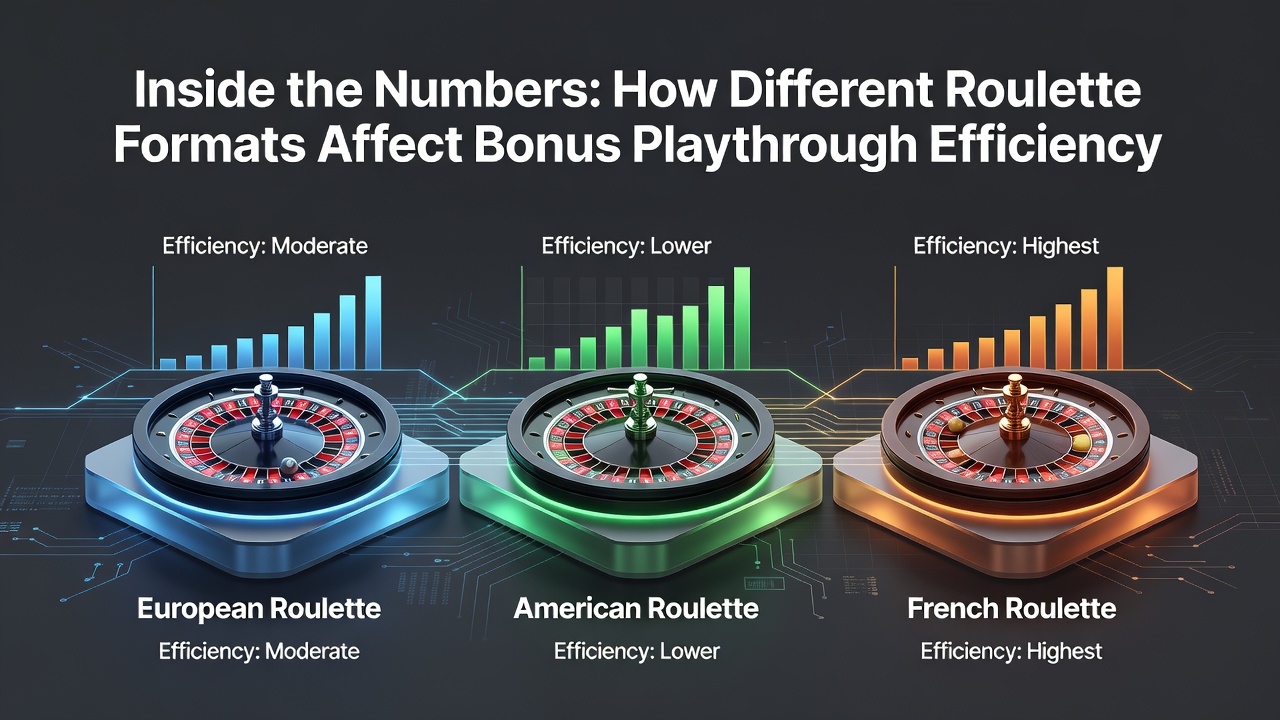
Roulette formats differ in wheel structure and payout rules, and these distinctions shape how bonus wagering requirements get met in practice since each variant carries its own house edge that determines the average loss rate per spin. American roulette features both a single and double zero on a 38-pocket wheel, while European versions use a 37-pocket layout with only one zero, and French tables add rules like La Partage that return half the stake on even-money bets when zero appears.
Core Mechanics Behind Playthrough Calculations
Bonus playthrough efficiency measures the expected retention of funds while satisfying wagering thresholds, and operators set these thresholds based on game contribution rates that reflect mathematical probabilities across formats. Data from regulatory records show that games with lower house edges allow players to complete requirements with smaller net losses over the same volume of bets, whereas higher-edge options accelerate fund depletion. Observers note that contribution percentages often range from 50 to 100 percent depending on the casino's policy, yet the underlying RTP remains the decisive factor in long sessions.
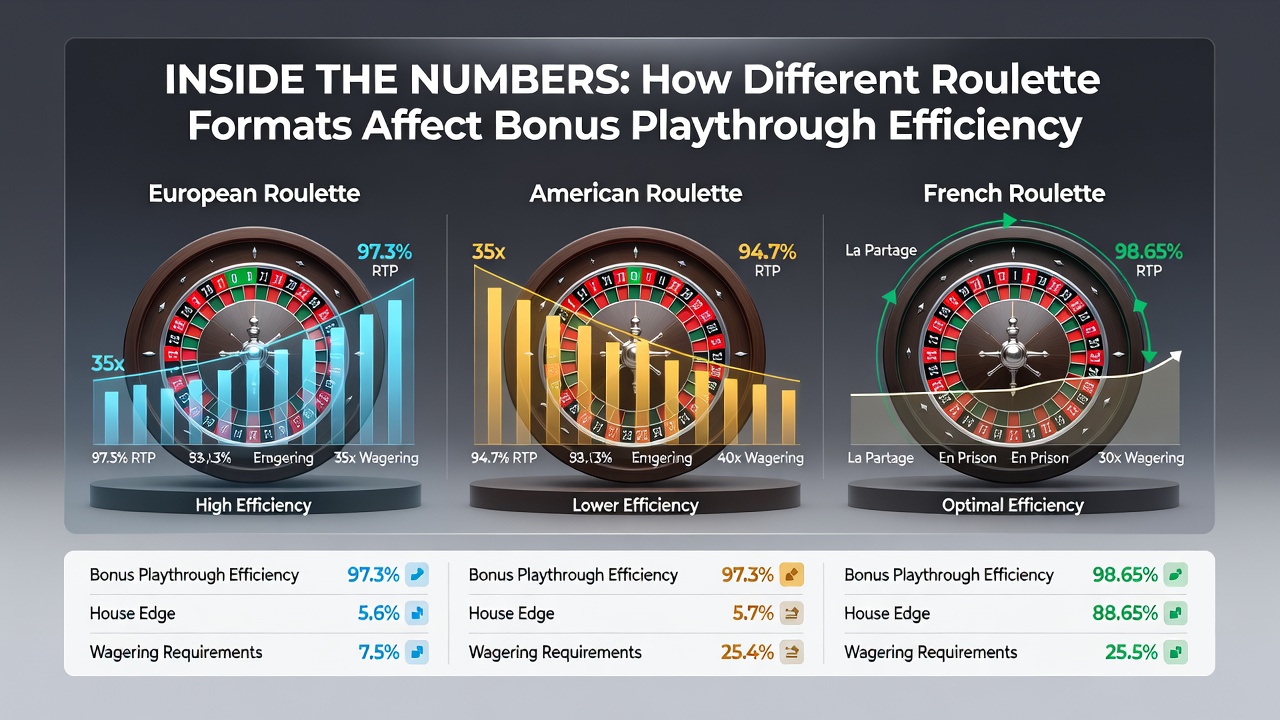
Calculations start from the standard RTP figures: American roulette returns approximately 94.74 percent on average, European roulette reaches 97.3 percent, and French roulette with La Partage climbs to 98.65 percent on even-money wagers. These percentages translate directly into expected loss per 100 units wagered, so a player clearing a 30-times playthrough on a 100-unit bonus faces different outcomes depending on the wheel selected.
Variant-Specific Impacts on Wagering Efficiency
American roulette demands more total action to offset its 5.26 percent house edge, and players who stick exclusively to this format encounter steeper drawdowns during bonus clearing because each even-money bet carries elevated risk compared with single-zero alternatives. European roulette improves retention rates through its single-zero design, which cuts the house edge nearly in half and thereby stretches bonus funds across the required number of spins without rapid erosion. French roulette further enhances efficiency when La Partage applies, returning half the wager on zero outcomes and effectively lowering the edge to 1.35 percent on outside bets, a detail that regulatory filings in multiple jurisdictions have documented as a measurable advantage for extended play.
Researchers tracking session data across platforms report that players using French or European wheels complete identical wagering targets with 20 to 40 percent less average loss than those restricted to American tables, though actual results vary with bet size and session length. This efficiency gap widens when bonuses carry high multipliers, since the lower-edge formats preserve capital long enough to reach the threshold before variance eliminates the balance.
Market Context and Regulatory Influences as of August 2026
Industry reports compiled through August 2026 indicate continued expansion in regulated online casino offerings, with operators adjusting bonus structures to account for regional preferences in roulette formats. Australian oversight bodies have published aggregate data showing elevated participation in European-style tables within licensed markets, while Canadian provincial regulators track similar patterns in player selections that favor lower-edge variants for promotional play. These figures reveal that contribution weighting remains consistent, yet format choice continues to determine net outcomes when players navigate wagering conditions.
One study released by a North American research consortium examined thousands of simulated bonus redemptions and found measurable differences in completion rates tied directly to wheel type, confirming that single-zero and La Partage variants deliver higher success percentages under fixed playthrough demands. Such findings align with earlier probability models developed at academic institutions and underscore why operators publish clear game lists that categorize each title's contribution level.
Practical Examples from Session Tracking
Consider a 200-unit bonus subject to a 40-times playthrough requirement: on an American wheel the expected loss reaches roughly 42 units by completion, whereas the same requirement on a European wheel reduces expected loss to about 22 units, and French rules lower it further to around 11 units. These projections derive from standard RTP values and assume even distribution of bets across outside propositions, patterns that multiple independent analyses have replicated. Players who rotate between formats within a single bonus cycle can optimize outcomes further, though most platforms apply the contribution rate of the game actually played at each step.
Additional variables include table limits and maximum bet caps during bonus rounds, factors that operators disclose in terms and conditions to maintain compliance across jurisdictions. Data collected by European trade associations demonstrate that sessions incorporating French roulette rules achieve target wagering volumes with greater frequency when compared against equivalent American roulette sequences.
Conclusion
Roulette format selection directly modulates bonus playthrough efficiency through established differences in house edge and payout mechanics, and available regulatory and academic records confirm that lower-edge options preserve funds more effectively across required wagering volumes. Players benefit from reviewing each platform's game contribution tables and selecting variants accordingly, since the mathematical structure of the wheel determines average retention independent of individual outcomes. Continued tracking by oversight agencies through 2026 provides updated datasets that reinforce these relationships without altering the underlying probabilities.