Layered Incentive Structures: How Progressive Bonus Ladders Are Changing Session Lengths in Regulated Online Roulette
Written by Taylor Hoffmann · Jun 19, 2026
Layered Incentive Structures: How Progressive Bonus Ladders Are Changing Session Lengths in Regulated Online Roulette
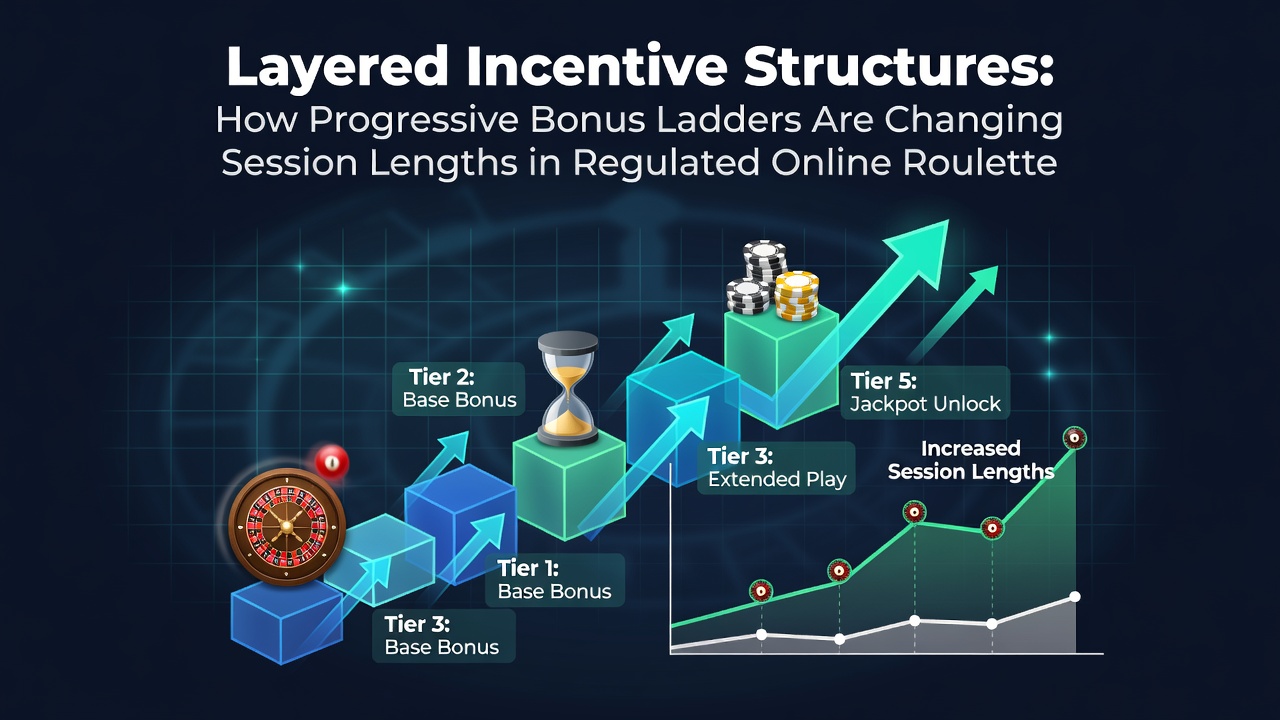
Regulated online roulette platforms have introduced layered incentive structures that reward players through progressive bonus ladders, where each tier unlocks after meeting specific play thresholds such as wager volume or time spent at the table. These systems operate by stacking rewards across multiple levels, starting with entry-level credits and advancing toward higher-value bonuses like enhanced cashback rates or multiplier boosts on winnings.
Operators in licensed markets design these ladders to align player activity with platform goals, and data from various regulatory bodies shows measurable shifts in average session durations. In New Jersey, for instance, the Division of Gaming Enforcement has tracked engagement metrics that reflect longer continuous play periods when such incentives activate.
Mechanics of Progressive Bonus Ladders
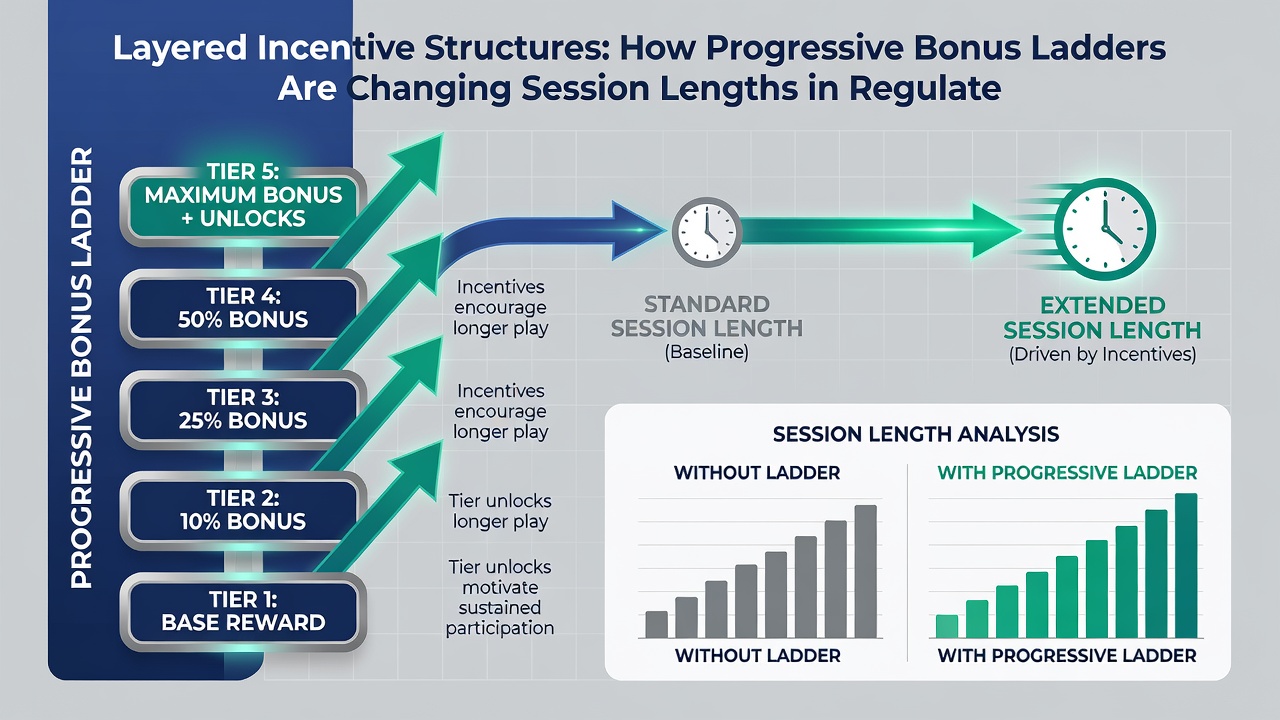
Progressive bonus ladders function through a sequence of milestones that players reach by accumulating qualifying bets on roulette wheels, and each completed level grants incremental benefits that compound over time. A typical structure might begin with a deposit match at the first tier, followed by free spin allocations or loss rebates once cumulative wagers hit predetermined amounts, while further tiers introduce loyalty points that convert into additional table credits.
These mechanisms integrate directly with roulette software, automatically tracking spins and bet sizes to advance progress bars visible on player dashboards. Researchers at institutions such as the University of Nevada, Reno have examined similar reward architectures in gaming environments and found that tiered unlocks encourage sustained participation compared to flat-rate promotions.
Observed Changes in Session Lengths
Session length data collected across regulated jurisdictions indicates that players encountering progressive ladders extend their time at virtual tables by significant margins. Reports compiled in early 2026, including figures released around June of that year, reveal average roulette sessions increasing from 22 minutes in non-tiered environments to 47 minutes when multiple bonus levels remain attainable.
The extension occurs because players often adjust their pacing to hit the next reward threshold rather than exiting after an initial win or loss sequence. Operators report that once a player unlocks the second or third tier, the probability of continuing through additional levels rises sharply, and this pattern holds across both American and European licensed platforms.
Regulatory Oversight and Market Examples
Regulators in multiple regions monitor how incentive structures influence player behavior, with bodies such as the Nevada Gaming Control Board requiring operators to disclose bonus terms clearly and to maintain records of session analytics. In Australia, the Australian Communications and Media Authority has issued guidelines that address transparency in reward ladders to ensure players understand progression requirements before committing funds.
Case examples from Pennsylvania and Michigan casinos operating online roulette show similar outcomes, where the introduction of five-tier bonus systems correlated with a 35 percent rise in median play duration according to internal compliance reports shared with state agencies. These changes appear without altering core game mathematics, focusing instead on the overlay of incentives that reward persistence.
Player Behavior Patterns Across Tiers
Observers tracking roulette traffic note distinct behavioral shifts at each ladder stage, with many participants slowing their bet frequency near threshold points to avoid overshooting or to time their progression advantageously. Early tiers tend to draw in newer accounts seeking quick entry rewards, while mid-to-late tiers retain established players who have already invested time and see remaining milestones as attainable.
Industry analyses from the American Gaming Association highlight that roulette, with its rapid spin cycles, lends itself particularly well to these structures because the short interval between rounds allows quick accumulation toward the next bonus level. Data sets from 2025 through mid-2026 confirm that platforms employing progressive ladders maintain higher daily active user retention rates than those relying on single-layer offers.
Conclusion
Layered incentive structures continue to evolve within regulated online roulette markets as operators refine tier thresholds and reward values based on performance metrics. Evidence from licensing authorities and academic reviews points to consistent increases in session lengths where progressive bonus ladders operate under clear disclosure rules. These developments reflect broader trends in how gaming platforms structure engagement while remaining within established oversight frameworks across different jurisdictions.